


Oxford City in 1068 AD
- Loremaster

- Jul 6
- 3 min read

The City of Learning Before the University
Albion Conquest – A World of Darkness: Dark Ages Vampire LARP
In the spring of 1068 AD, Oxford stands at the crossroads of two worlds. Once a prosperous Anglo-Saxon burh guarding an important crossing of the River Thames, the city now finds itself adapting to Norman rule following William the Conqueror's victory only two years earlier. While castles rise across England and Norman lords claim estates once held by Saxon thegns, Oxford remains a bustling market town where merchants, craftsmen, clergy, and travelers from every corner of England cross paths.
For those who walk beneath the sun, Oxford is a place of commerce and faith. For those who walk beneath the moon, it is a city where ancient knowledge, forgotten Roman foundations, and hidden Kindred influence quietly shape the future of England.
A City of Trade
Oxford's location makes it one of the busiest inland trading settlements in southern England. The Thames carries barges laden with timber, grain, wool, iron, pottery, and wine while roads leading toward London, Winchester, Gloucester, and the Midlands bring merchants from across the kingdom.
The market square is filled with activity from dawn until dusk.
Saxon farmers sell fresh produce beside Norman traders offering imported cloth from Rouen. Blacksmiths shape horseshoes and weapons while leatherworkers, coopers, bakers, and wool merchants conduct lively business. The sounds of hammers, church bells, livestock, and bargaining voices echo through narrow streets lined with timber-framed homes.
Despite the recent conquest, daily life continues much as it always has.
The People of Oxford
Oxford's citizens represent both the old England and the new.
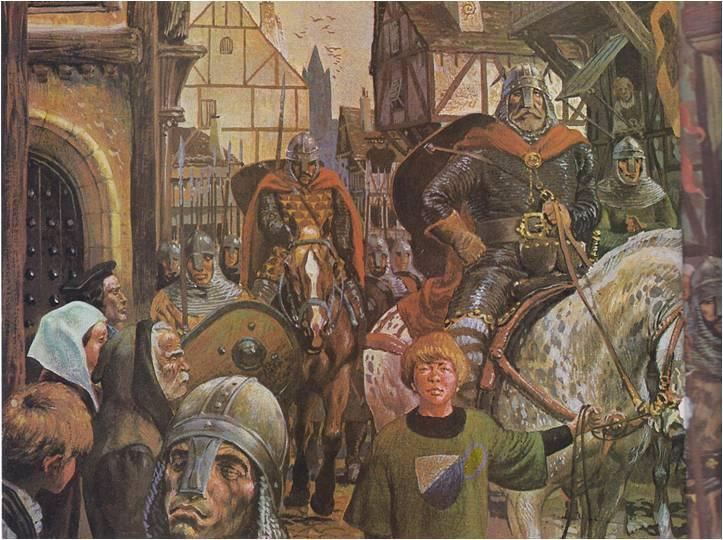
The Saxons still make up the overwhelming majority of the population. Many families have lived here for generations, working the same shops and workshops long before the Normans crossed the Channel.
New Norman officials and soldiers have begun settling within the town, bringing with them French customs, architecture, and the authority of King William. Some are welcomed as protectors; others are viewed as occupiers.
Among the common folk, daily survival matters more than politics. Bakers rise before sunrise, fishermen work the riverbanks, craftsmen apprentice their children, and monks preserve knowledge by candlelight while England slowly changes around them.

Faith and Knowledge
Long before Oxford becomes famous as a center of learning, it is already home to respected churches and clergy. Monasteries preserve precious manuscripts copied by hand, keeping alive the writings of Rome, the Church Fathers, and ancient scholars.
Priests educate promising boys in Latin and scripture, while noble families sometimes send their sons here to receive instruction before entering royal or ecclesiastical service.
Hidden among these libraries may rest books far older than anyone realizes—works copied from forgotten Roman collections or brought from distant monasteries across Europe.
Such treasures inevitably attract the attention of the Kindred.
The Shadows Beneath the Streets
Beneath Oxford's timber buildings lie remnants of Roman Britain.
Collapsed foundations, forgotten wells, abandoned crypts, and buried roads form a maze beneath the city. Few mortals dare explore them.
Among Kindred society, however, these hidden places serve as meeting halls, havens, and repositories of ancient knowledge. Rumors speak of forgotten Roman shrines, sealed vaults, and relics dating back to the earliest nights of Britannia.
Some whisper that Oxford's greatest treasure is not gold, but knowledge.
Oxford in Albion Conquest
Within Albion Conquest, Oxford is far more than a peaceful market town.
It is a place where Norman ambition collides with Saxon tradition, where merchants unknowingly carry secrets as valuable as silver, and where scholars preserve knowledge coveted by immortal elders. Every tavern conversation may conceal political intrigue, every monastery may hide forbidden manuscripts, and every ancient cellar may lead to forgotten chambers beneath Roman Britain.
Whether you are a noble seeking influence, a wandering Gangrel following old roads, a Brujah searching for allies, or a Toreador drawn to culture and learning, Oxford offers opportunities unlike any other city in England.
The streets belong to the living.
The foundations belong to history.
And when darkness falls, the city belongs to the Damned.


Comments